
Tips and Advice
Read the latest helpful insights and practical tips from our expert physiotherapists to help you move better and feel stronger.
Information provided by All Care Physiotherapy Brisbane is for general education and does not replace individual assessment by a registered physiotherapist.
Why You Should Make All Care Physiotherapy Your Vestibular Physiotherapist in Brisbane
At All Care Physiotherapy in Brisbane CBD, our physiotherapists have extensive experience in assessing and treating vertigo, including Benign Paroxysmal Positional Vertigo (BPPV). Many people across Brisbane seek help for dizziness, room-spinning sensations, balance issues and nausea — symptoms commonly linked to inner-ear conditions.
What Is BPPV and How Is It Treated?
Let’s break down the term:
Benign — not harmful
Paroxysmal — sudden, brief episodes
Positional — triggered by head movement
Vertigo — sensation of spinning or motion
BPPV occurs when tiny calcium crystals inside the inner ear move into one of the semicircular canals, causing brief episodes of spinning dizziness, especially when rolling in bed, looking up, bending forward or changing head position.
A physiotherapist trained in vestibular assessment can:
identify the affected ear and canal using positional tests and eye-movement assessment
perform specific repositioning manoeuvres
provide home advice and exercises to assist recovery
Most people notice improvement over several days as the vestibular system rebalances.
What BPPV Feels Like
A person with BPPV may suddenly feel the room spinning when sitting up, rolling over in bed or bending forward. They may also experience nausea or a sense of unsteadiness. These symptoms often appear without warning and may settle when lying still, then return with specific movements.
This can understandably feel concerning and many people seek advice from their GP before attending a vestibular physiotherapy assessment.
How the Vestibular System Works
Your inner ear contains:
Three semicircular canals
Two vestibular organs (utricle and saccule)
Inside the vestibular organs are tiny calcium carbonate crystals (otoconia). These help detect movement and gravity.
What Happens in BPPV?
Sometimes these crystals become dislodged and move into one of the semicircular canals. When this occurs:
the ear sends incorrect movement signals to the brain
your brain receives conflicting information
your eyes may show involuntary movements
you may feel spinning, nausea, or dizziness
How Vestibular Physiotherapy Helps With BPPV
At All Care Physiotherapy, the assessment includes:
✔ Detailed history
Reviewing symptom triggers, duration, medical background, and balance concerns.
✔ Eye-movement assessment
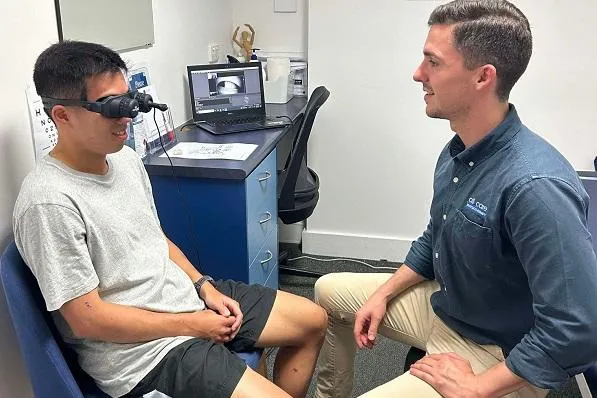
Using infrared video goggles to observe nystagmus during specific head movements.
✔ Positional testing
✔ Education and home guidance
To identify which canal and which side are involved.
✔ Individualised repositioning manoeuvres
If BPPV is confirmed, the physiotherapist guides you through gentle manoeuvres designed to move the crystals back toward the vestibular organ where they originated.
✔ Education and home guidance
Most people gradually return to their usual daily activities as their symptoms settle.
If you are experiencing vertigo, dizziness, or symptoms that may indicate BPPV, you can contact All Care Physiotherapy on (07) 3112 7700 or book online.
We welcome clients from the Brisbane CBD, South Brisbane, West End, Milton, Toowong and surrounding suburbs.



Follow Us
The Clinic
Common conditions
© Copyright 2026. Vitala Health. All rights reserved.
Facebook
Instagram
LinkedIn