
Tips and Advice
Read the latest helpful insights and practical tips from our expert physiotherapists to help you move better and feel stronger.
Information provided by All Care Physiotherapy Brisbane is for general education and does not replace individual assessment by a registered physiotherapist.
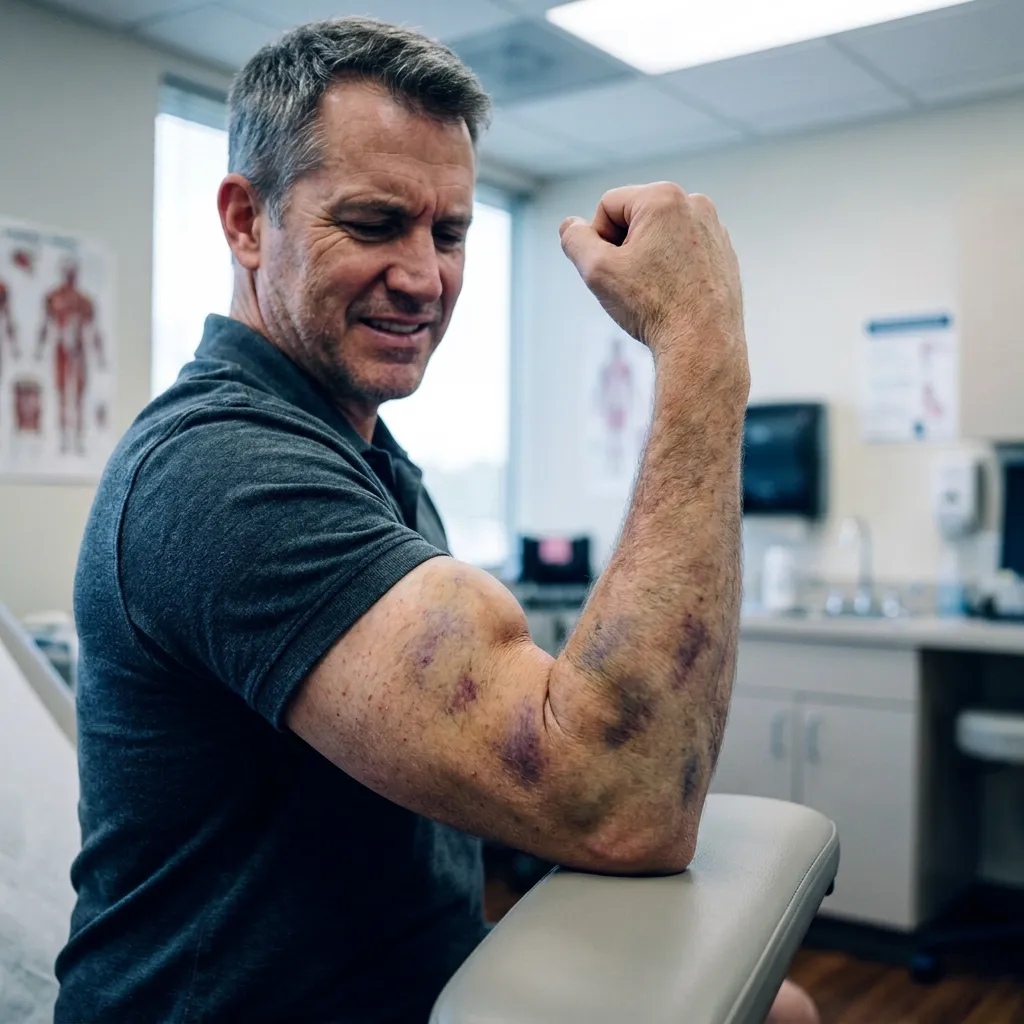
Complete Bicep Rupture Rehab | Spring Hill
A complete bicep rupture is a serious upper limb injury that can significantly affect arm strength and function. It often occurs suddenly and may be associated with lifting heavy objects, forceful pulling or sudden strain on the elbow or shoulder.
Many people notice an immediate change in arm appearance and strength following the injury, which can make everyday tasks such as lifting, carrying or twisting the arm more difficult.
At All Care Physiotherapy in Spring Hill, Brisbane, our physiotherapy and exercise physiology team provides structured rehabilitation programs to support recovery from bicep tendon injuries and help individuals return to their normal activities safely.
What Is a Complete Bicep Rupture?
The biceps muscle is located at the front of the upper arm and plays an important role in:
• Bending the elbow
• Rotating the forearm
• Assisting shoulder movement
A complete bicep rupture occurs when the tendon attaching the muscle to bone fully tears. This is different from a partial tear, where the tendon is only partially damaged.
Complete ruptures most commonly occur at:
• The shoulder (proximal biceps tendon)
• The elbow (distal biceps tendon — more functionally significant)
What Are the Symptoms of a Complete Bicep Rupture?
Symptoms often appear suddenly and may include:
• Sharp pain in the upper arm or elbow
• A popping or tearing sensation at the time of injury
• Bruising around the arm
• Swelling
• Weakness when bending the elbow or rotating the forearm
• A visible “Popeye” deformity in some cases
• Difficulty lifting or carrying objects
The level of functional limitation depends on the location and severity of the rupture.
What Causes a Complete Bicep Rupture?
A complete bicep rupture is typically caused by sudden, excessive force placed on the tendon.
Common causes include:
• Heavy lifting, particularly with poor mechanics
• Sudden pulling movements
• Sporting activities involving explosive upper limb effort
• Workplace injuries involving lifting or manual handling
• Degenerative changes in the tendon over time
Risk factors may include age, smoking history, previous tendon issues and repetitive strain.
How Is a Bicep Rupture Diagnosed?
Diagnosis typically involves a clinical assessment.
Assessment May Include:
• Injury history and mechanism
• Physical examination of strength and movement
• Visual inspection of the arm
• Functional testing
Imaging such as ultrasound or MRI may be used to confirm the diagnosis and determine the extent of the tear.
Treatment Options for Complete Bicep Rupture
Treatment depends on the location of the rupture, functional demands and individual circumstances.
Non-Surgical Management
Some proximal (shoulder-related) bicep ruptures may be managed without surgery, particularly in individuals with lower physical demands.
Management may include:
• Pain management strategies
• Activity modification
• Rehabilitation exercises
Surgical Management
Distal biceps ruptures (near the elbow) are more commonly treated surgically, particularly for individuals requiring higher arm strength.
Surgery aims to reattach the tendon to restore function.
Rehabilitation plays a key role following either surgical or non-surgical management.
How Can Exercise Physiology Help With Bicep Rupture Recovery?
Exercise physiology focuses on structured, progressive exercise programs to support recovery and restore function.
Restoring Strength
Following a bicep rupture, the upper limb often experiences reduced strength.
Rehabilitation may target:
• Elbow flexors
• Forearm muscles
• Shoulder stabilisers
• Grip strength
Strength programs are progressed gradually according to healing and tolerance.
Improving Function
Exercise programs aim to support everyday movement patterns such as:
• Lifting objects
• Carrying loads
• Rotating the arm
• Work-related tasks
The focus is on restoring safe and efficient movement.
Post-Surgical Rehabilitation Support
For individuals who undergo surgery, exercise physiology can assist with:
• Gradual strengthening
• Mobility restoration
• Functional retraining
• Return-to-activity planning
Programs are guided by surgical protocols and individual recovery progress.
How Long Does Recovery Take?
Recovery time varies depending on:
• Type and location of rupture
• Whether surgery was required
• Individual health and healing response
• Rehabilitation adherence
Recovery often occurs over several months, with gradual progression of strength and function.
Frequently Asked Questions About Bicep Rupture
Can I Still Use My Arm After a Bicep Rupture?
Many people can still use their arm, but strength—particularly for lifting and twisting—may be reduced.
Does a Complete Bicep Rupture Always Require Surgery?
Not always. The decision depends on the type of rupture, functional needs and advice from a medical practitioner.
When Can I Return to Exercise?
Return to exercise is gradual and guided by recovery stage, pain levels and professional assessment.
Will My Arm Return to Normal Strength?
Strength recovery varies between individuals and depends on injury severity, treatment approach and rehabilitation progress.
Bicep Rupture Rehabilitation in Spring Hill
A complete bicep rupture can significantly affect arm strength and function, but structured rehabilitation can play an important role in recovery.
At All Care Physiotherapy, located at Ste 16, Level 1, 149 Wickham Terrace, Spring Hill QLD 4000, our physiotherapy and exercise physiology team provides personalised rehabilitation programs for upper limb injuries, including tendon ruptures.
If you have experienced a bicep injury or are recovering from surgery, contact All Care Physiotherapy to arrange an assessment and discuss a tailored rehabilitation plan to support your recovery and return to activity. Book online or call 07 3186 0547.



Follow Us
The Clinic
Common conditions
© Copyright 2026. Vitala Health. All rights reserved.
Facebook
Instagram
LinkedIn