Tips and Advice
Read the latest helpful insights and practical tips from our expert physiotherapists to help you move better and feel stronger.
Information provided by All Care Physiotherapy Brisbane is for general education and does not replace individual assessment by a registered physiotherapist.
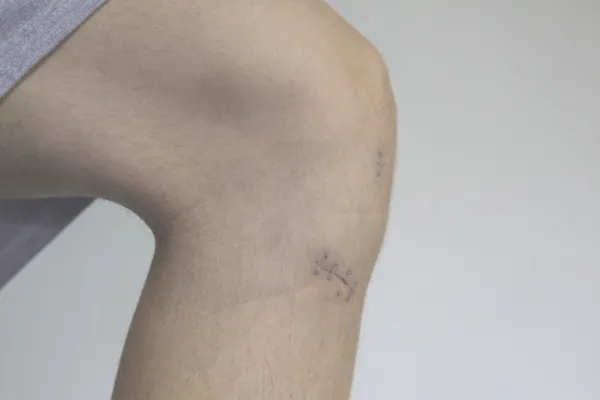
ACL Recovery Roadmap: Navigating the Long Road from Injury to High-Performance Return
Whether the injury occurred during a pivot on the soccer field, a landing on the court, or a simple misstep, the journey that follows is often a demanding physical and psychological challenge.
As an Exercise Physiologist (EP), my role in this journey is to serve as your navigator and guide. This guide outlines the four major milestones of ACL recovery and why an evidence-based approach is a great way to ensure you can safely and effectively return to your regular Activities of Daily Living (ADLs) or Sports Performance goals.
The Work Starts Before Surgery
If you’ve opted for surgical reconstruction, the period between your injury and your surgery date is a critical window of opportunity. Research consistently shows that patients who enter surgery with a quiet, stable knee and full quad activation have significantly better outcomes 12 months later.
The Goals of Pre-hab:
·Resolve Effusion: Reducing swelling is the priority. A swollen knee causes "Arthrogenic Muscle Inhibition" (AMI)—essentially, your brain sends a signal to your quads to "switch off" to protect the joint. We use compression and targeted movements to reduce that signal and increase joint strength and proprioception.
·Restore Extension: Being able to achieve greater degrees of knee flexion and extension pre-surgery will greatly improve the starting point for our post-surgery rehab.
·Maintain Strength: We focus on "safe" strength work for the hips, calves, and the opposite leg to maintain your overall metabolic health.
Phase 1: Regaining Control and the "Brain-Muscle Bridge" (Weeks 0–6)
The first six weeks post-op are the "Quiet Down" phase. The graft is at its most vulnerable, and your body is in a state of high alarm. The primary objective here is to restore basic biological function.
The "Quad Lag" Battle:
The most common hurdle in Phase 1 is the inability to lift your leg without the knee drooping. This is a strength issue, but also a nerve communication issue. We use isometric holds as a core exercise in this phase to remind your brain how to talk to your quadriceps.
Milestones for Phase 1:
·Knee extension equal to the non-injured side.
·Knee flexion to 120 degrees.
·A clean "straight leg raise" with no lag.
·Progressing towards a normalized walking pattern (no limping).
Phase 2: The Strength Renaissance (Weeks 6–16)
Between 6 and 12 weeks, the graft goes through a process called "ligamentization," where it actually becomes slightly weaker before it gets stronger. This is why our loading must be precise.
Building the Protective Strength:
We shift focus to progressive overload. We look at the knee as well as the "posterior chain"—the glutes, hamstrings, and calves. These muscles act as the secondary stabilizers for the ACL. If your hamstrings are strong, they help pull the tibia posteriorly (backwards), taking the load off the new graft.
Key Exercises:
·Split Squats: To isolate and fix the single-leg strength deficits.
·Romanian Deadlifts: To build the hamstrings that protect the ACL.
·Calf Raises: Because your calf is the "hidden" stabilizer of the knee.
Phase 3: Impact, Agility, and Deceleration (Months 4–7)
The primary goal of this phase is to add dynamism challenges for the knee. This is to prepare for day-to-day life, and the chaos of the sports field.
Learning to Decelerate:
An ACL doesn't usually tear because you couldn't jump high; it tears because you couldn't land safely. This phase is all about the "brakes." We teach you how to absorb force, how to land with a "soft" knee, and how to control your trunk during a lateral shuffle.
The "Control-to-Chaos" Continuum:
We start with linear movements (jogging in a straight line), then move to planned changes of direction (cones), and finally to reactive agility (reacting to a partner or a ball). This bridge is what reduces the likelihood of re-injury.
Phase 4: Return to Sport vs. Return to Performance (Months 9–12+)
Time on a calendar does not equal readiness. This is the phase where we refine on the previous ones, and focus in on sport specific performance and high energy dynamic tasks.
The Criteria for Success:
Before I clear an athlete for full contact, they must pass a battery of tests:
·Strength Symmetry: Your surgical leg must be at least 90-95% as strong as your non-surgical leg (specifically in the quads).
·Hop Testing: You must be able to hop for distance, height, and speed with symmetry.
·Psychological Readiness: We use tools like the ACL-RSI (Return to Sport Index) to measure your confidence. If you're physically ready but scared of the knee, you are at a higher risk of re-injury due to hesitant movement patterns.
Conclusion: Your New Baseline
By following a structured, criteria-based roadmap, we turn an injury into an opportunity. Your comeback is a marathon. It’s a series of small, disciplined wins that add up to a successful return to the activities you love.
If you feel like you could benefit from an exercise physiology session please give us a call on 07 3186 0547 or book online.


Follow Us
The Clinic
Common conditions
© Copyright 2026. Vitala Health. All rights reserved.
Facebook
Instagram
LinkedIn